
There’s plenty of outrage so we aren’t going to do that. Instead, we’re creating a place with new tips, tools, insights, sources, and stories that can help us understand how to win this November.
😬
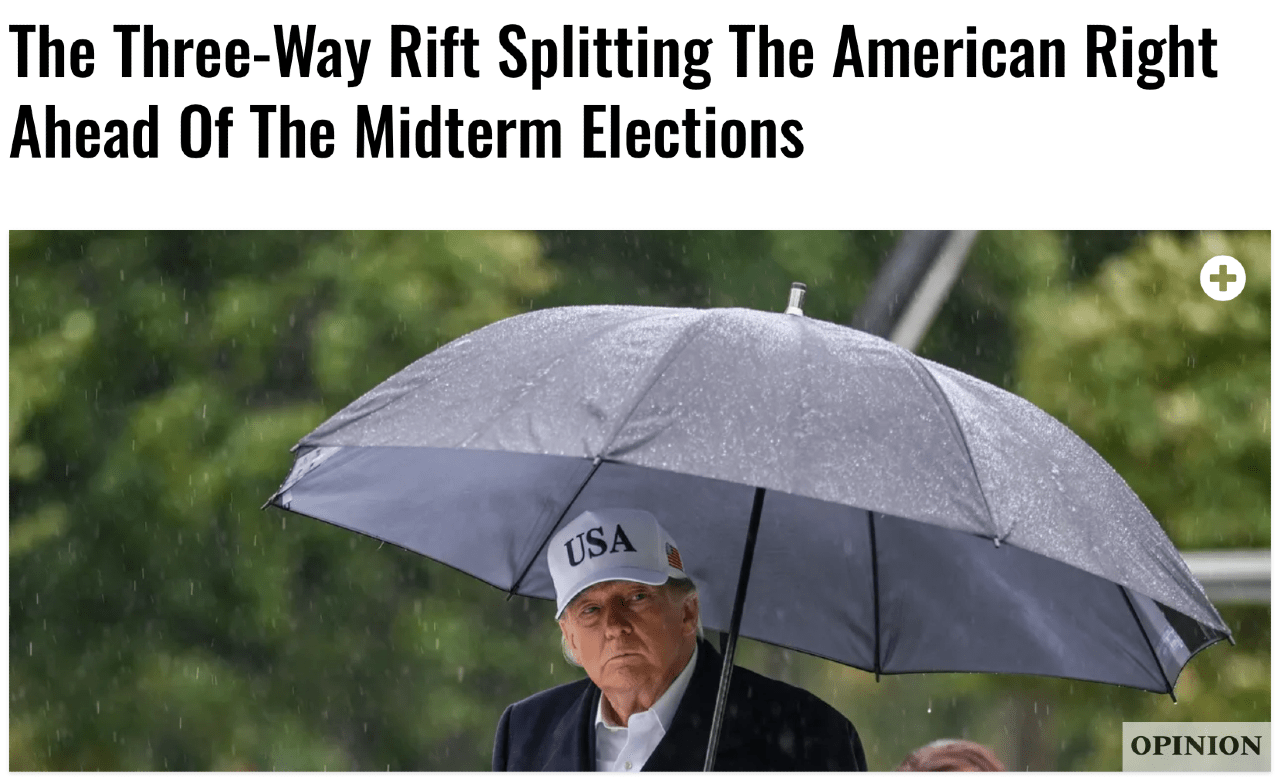
The MAGA coalition that delivered Trump the White House in 2024 doesn’t exist as one coalition anymore — it’s split into three factions that can’t agree on tariffs, Iran, or who leads them next.
According to the Daily Caller, an extreme right-wing media outlet, a widening three-way rift has divided Republicans into MAGA populists, an anti-interventionist “Woke Right,” and old-guard institutionalists, and the cracks are already measurable: 64 percent of MAGA loyalists condemned the Supreme Court’s ruling striking down Trump’s tariff regime, while a majority of non-MAGA Republicans cheered the Court’s intervention. Only a third of MAGA voters think the costs of the Iran war were worth it, and the list of Republicans quietly maneuvering for a post-Trump 2028 run keeps growing as his approval sags. Every one of our target districts has Republican voters who no longer trust the same leaders or the same playbook, which means the campaigns willing to talk honestly about that incoherence — instead of treating the GOP as one monolithic enemy — are the ones who will actually move persuadable voters this November.
💰💰💰
ATTACK THE REPUBLICANS
We’re running ads against the most vulnerable Republicans in the country and it’s working! For as little as $300, we can reach 15,000 voters on social media. We only target in district Independents and frustrated Republicans with our ads on Instagram and Facebook and the comments prove they agree with our ads! We can take power together. Support our campaign now.

🚨
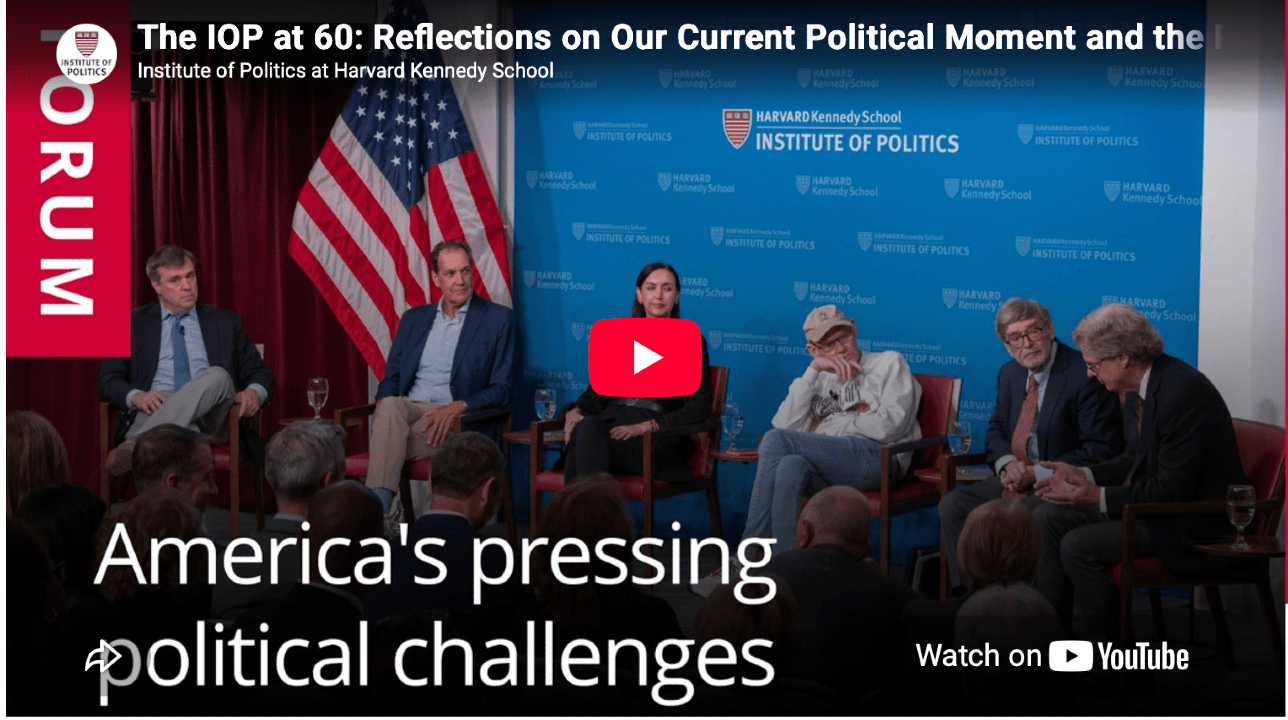
When James Carville and a Republican strategist share a stage and agree the political wind is blowing toward Democrats, that’s not spin — that’s the real state of the race.
At Harvard’s 60th-anniversary Institute of Politics forum, a bipartisan panel including Carville, GOP strategist Betsy Ankney, pollster John Anzalone, Cook Political Report’s Charlie Cook, and the Washington Examiner’s Byron York all pointed to the same headwinds working against Republican candidates: Trump’s high disapproval ratings and a brutal cost-of-living environment. The panel flagged two Senate races worth watching closely as the environment shifts — Susan Collins’s reelection bid in Maine and Abdul El-Sayed’s run in Michigan — both tests of whether a bad national environment for the GOP actually turns into flipped seats. The takeaway for us: the fundamentals favor us right now, but fundamentals don’t bank themselves — they only turn into flipped seats if we put real money behind the races where it matters most.
😱
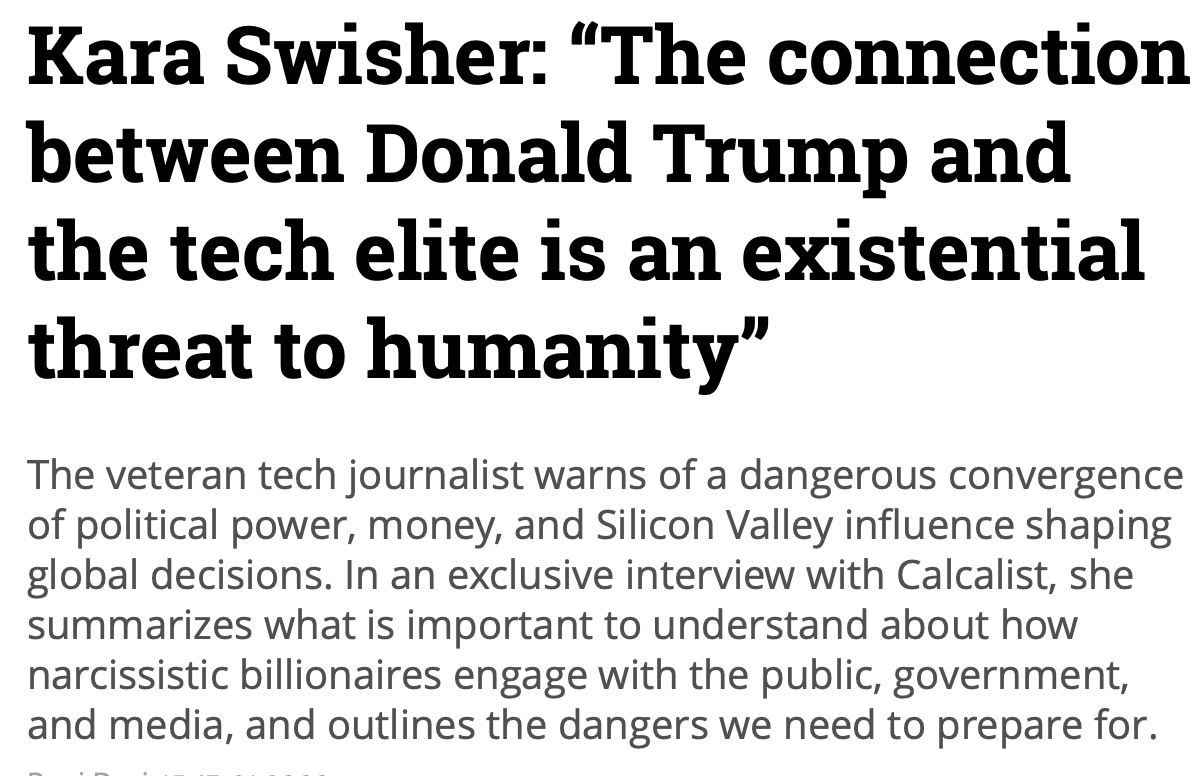
Kara Swisher is naming the thing most Democrats are still too polite to say out loud: the alliance between Trump and Silicon Valley’s biggest fortunes isn’t a business story, it’s a power story, and it should scare us.
In a recent conversation on the future of AI, Swisher argues we’re in “a new nuclear age” of concentrated tech power, and she’s been blunt elsewhere that the Trump-tech elite connection is “an existential threat” — not metaphorically, but as a real convergence of political power, money, and unregulated AI reshaping decisions that affect everyone. She points to concrete fallout already happening, like the administration slashing funding for drug discovery and health research, pushing companies to relocate to Canada instead. Her closing argument is the one worth borrowing: this isn’t a problem Washington’s existing power brokers in either party are rushing to fix, so ordinary people have to be the ones demanding real AI accountability — which is exactly the “we have to fix it ourselves” message at the center of our own campaign.
💰💰💰
ATTACK THE REPUBLICANS
We’re running ads against the most vulnerable Republicans in the country and it’s working! For as little as $300, we can reach 15,000 voters on social media. We only target in district Independents and frustrated Republicans with our ads on Instagram and Facebook and the comments prove they agree with our ads! We can take power together. Support our campaign now.

🤖
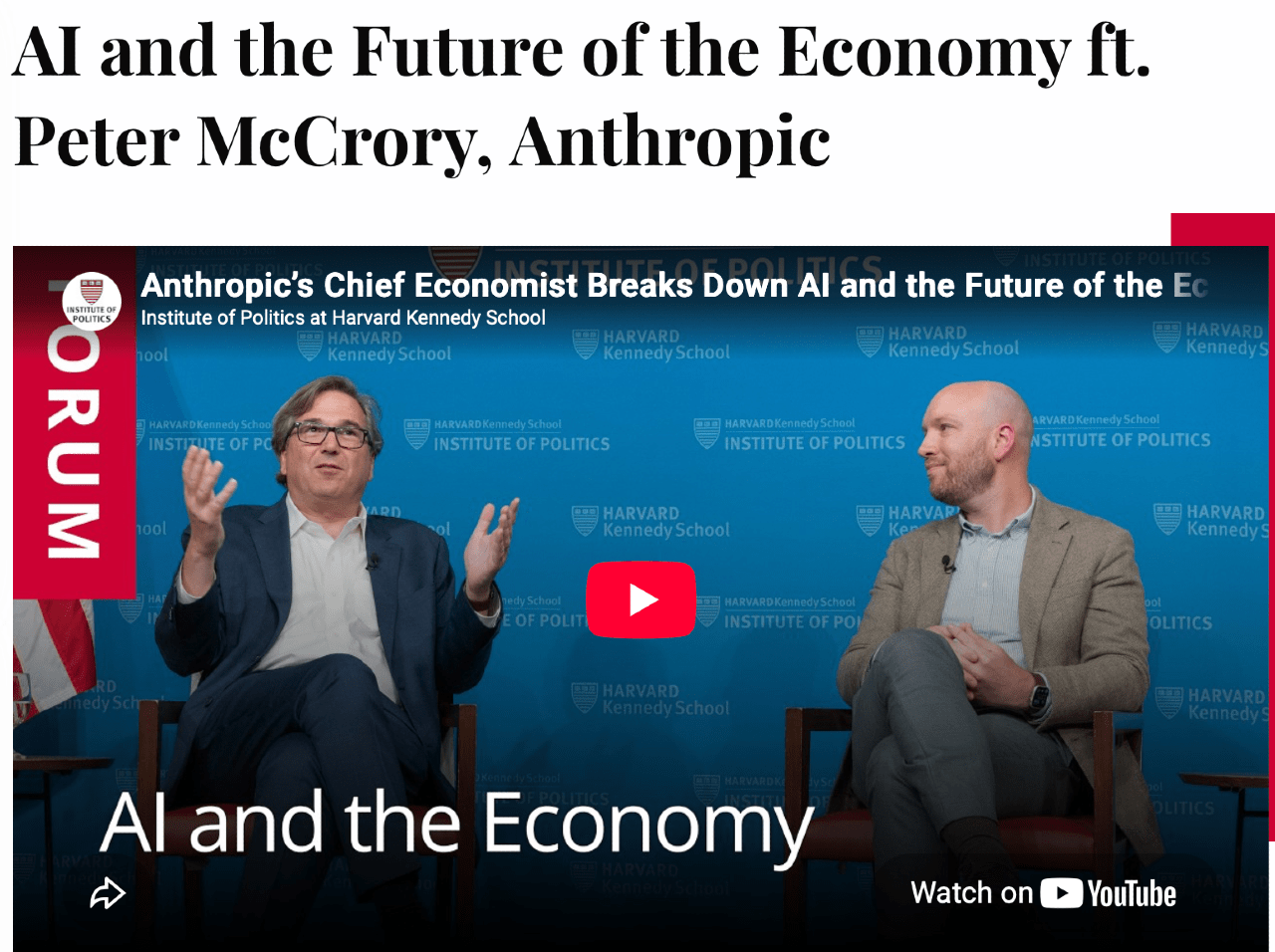
The most useful data point from an Institute of Politics AI-and-the-economy forum wasn’t about robots taking jobs — it was that ordinary Americans already see the disruption coming, and their expectations are more pessimistic than most are willing to admit.
At a Harvard Kennedy School forum, economist Jason Furman pressed Anthropic’s chief economist Peter McCrory on new modeling of how AI could reshape GDP, wages, and unemployment by 2030 — and McCrory revealed that when his team surveyed nearly 11,000 US adults, the median respondent’s expectations already matched a “substantial change” scenario: 8 percent higher GDP alongside a 4 percent drop in cognitive employment. Across every scenario the research modeled, labor’s share of income falls as wage gains concentrate among higher-skilled workers who can access the tools first — McCrory called it AI’s “uneven incidence.” That’s code for the billionaires get even richer. Democrats must own this policy fight: the party willing to talk concretely about retraining, income support, and who AI serves will have a real answer where Republicans are offering silence or blind deregulation.
If you like what we’re doing, please share Flip the States with a friend and ask them to sign up so they get analysis and recommendations like these. If you love what we are doing, send us a donation to help fund the work. We’re a registered 501c4 nonprofit and never take from donations that go directly to the candidates you choose to support.