

There’s plenty of outrage so we aren’t going to do that. Instead, we’re creating a place with new tips, tools, insights, sources, and stories that can help us understand how to win this November.
🗳️
AI stopped being an abstract issue for this year’s midterms the moment it started showing up in our electricity bills.
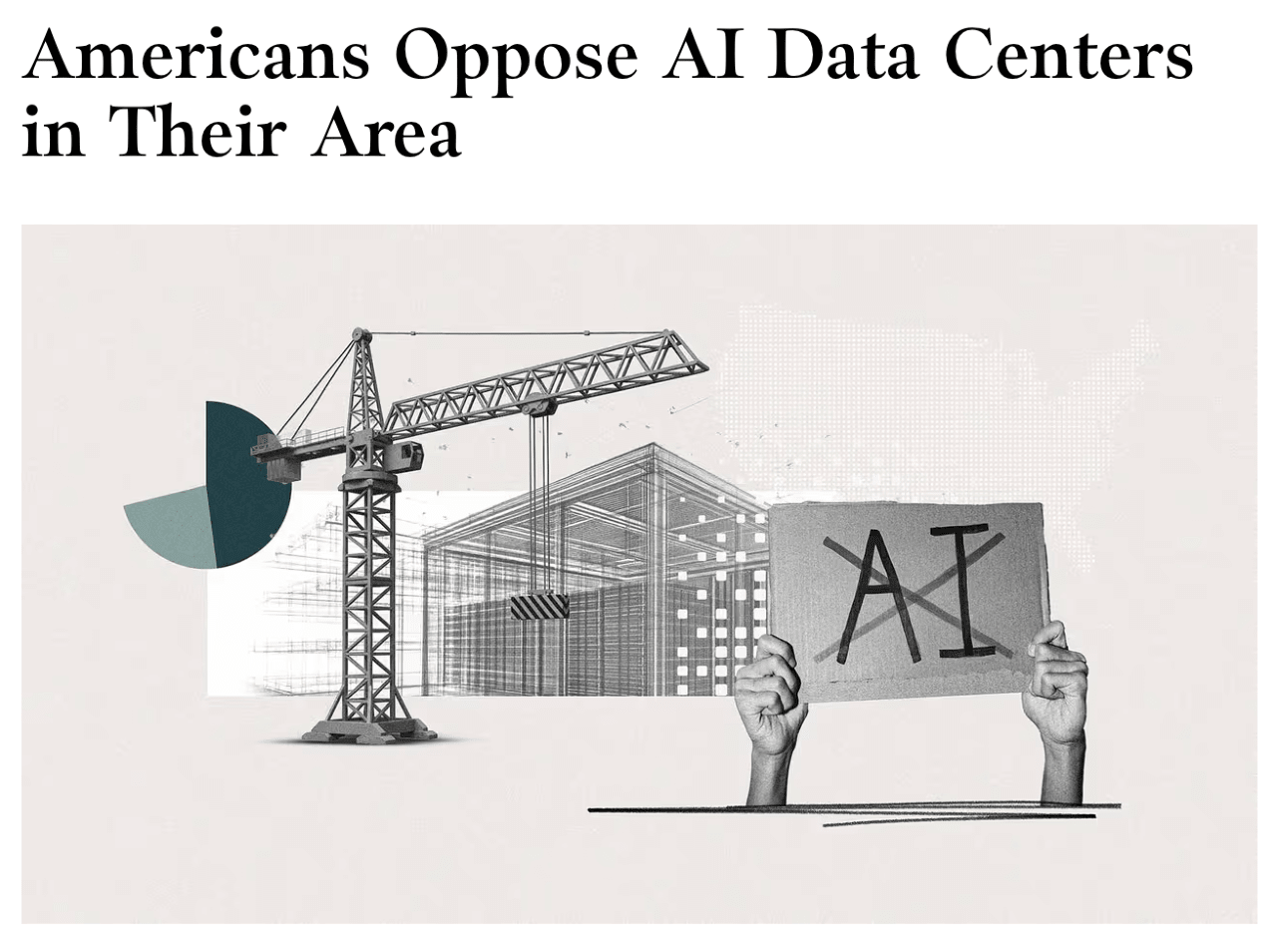
The data center boom exists to train and run frontier models, and the cost of that buildout is landing on us: wholesale power costs rose as much as 267% near heavy data center activity between 2020 and 2025, and utilities requested a record $31 billion in rate hikes last year. Seventy percent of Americans now oppose data centers in their area — the most settled public opinion on almost any political issue, and Democrats already flipped two Georgia utility commission seats on that anger. The backlash is now a defining midterm issue precisely because it turns an abstract technology fight into a real price tag on top of real fear — and Trump has committed his party to defending the buildout.
🤖
The AI industry and the White House just split in public, and that fracture is ours to use.
Anthropic CEO Dario Amodei’s Sep 12 essay called for slowing capability gains, opening labs to outside evaluators, and coordinating safety standards among democracies; Sam Altman, Demis Hassabis and Elon Musk all agreed. Two days later Trump attacked Amodei by name, declaring the only guardrail AI needs is “a STRONG AND SMART (High IQ!) PRESIDENT” and calling opposition to data centers a sick conspiracy that benefits China. When the people building the technology say it needs rules and the President says it doesn’t, safety stops being a partisan position and becomes a competence one — and Congress left town Thursday without acting, so nothing changes before the midterms.
😱
The AI industry isn’t one lobby buying one outcome – it’s two networks at war, and the pro-regulation side just lost its biggest fight.
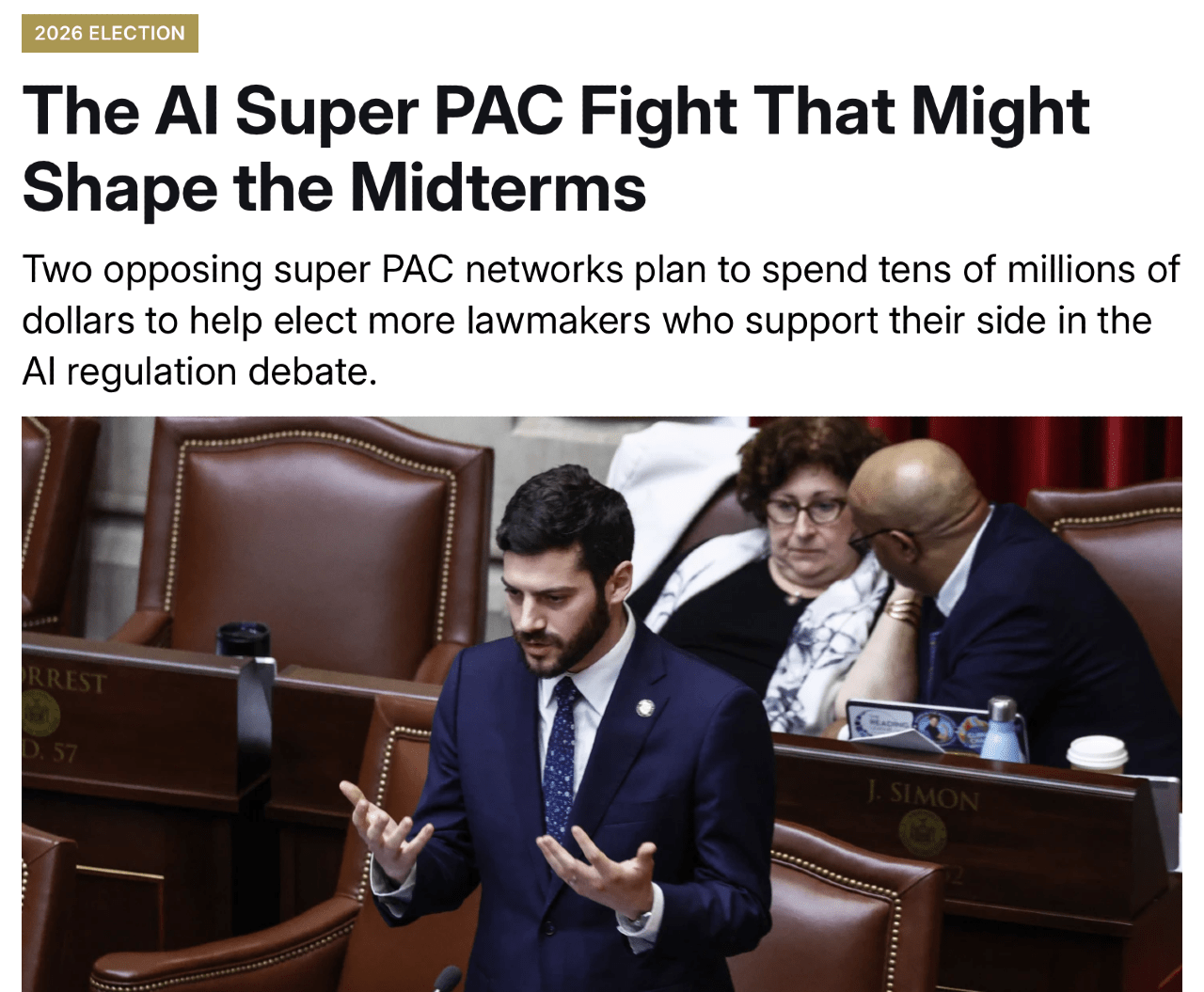
Leading the Future, launched with $100 million from Andreessen Horowitz and OpenAI president Greg Brockman, wants a national framework that preempts state AI law; Public First, seeded with $20 million from Anthropic, wants tougher rules, and each side fields both a Democratic and a Republican arm. They collided over Alex Bores, the assemblyman who pushed through New York’s RAISE Act, in the most expensive House primary of the cycle — more than $40 million in outside money, and Bores lost anyway. This week he launched a $30 million nonprofit to fight on policy instead, which is the lesson for us: we are not going to out-raise a16z on AI as an issue, so we win these seats on the electric bill and legislate on AI afterward.
🙌
Donate today to our Flip 5 to Take The House Campaign
Take direct action to target vulnerable Republicans this Spring. Our campaign to flip 5 seats is focused on targeting Republican incumbents and tying them to Trump’s abuse of power and corruption. We can take power together. Support our campaign now.
💪
Republican Gabe Evans, one of our top targets, tried to pass a pretend AI bill. Luckily, a Democrat made clear it didn’t go anywhere close enough to regulate AI.
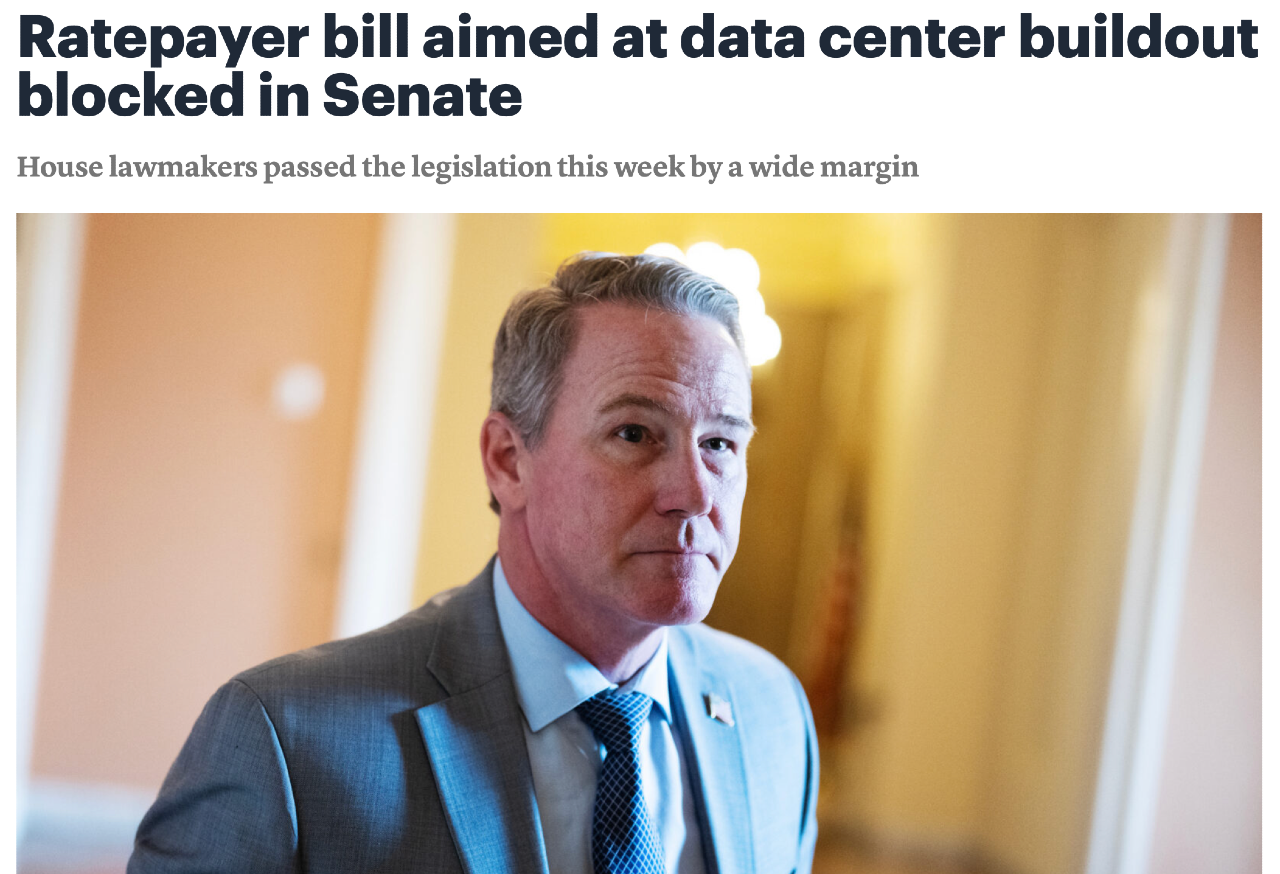
Evans did as he has always done – he did Trump’s bidding by introducing a bill in the US House on the Ratepayer Protection Act, which only requires states to hold proceedings on whether operators drawing 100 megawatts or more should pay for grid upgrades — it mandates nothing, of states or of the companies. Senator Martin Heinrich objected that it doesn’t go far enough and moved his own GRID Savings Act instead, and he is right on the substance: voters, who oppose these facilities seven to three, are not asking for a hearing about who pays for transmission lines. They want real rules on an industry whose own CEOs spent this week publicly asking to be regulated. Evans got a unanimous vote for doing the least. Like Senator Heinrich, Democrats must actually lead.
🤖🚔
The DOJ is attacking states trying to regulate AI. This means state legislative races are AI policy races now, whether anyone campaigns on them or not, and CO is the prime example.
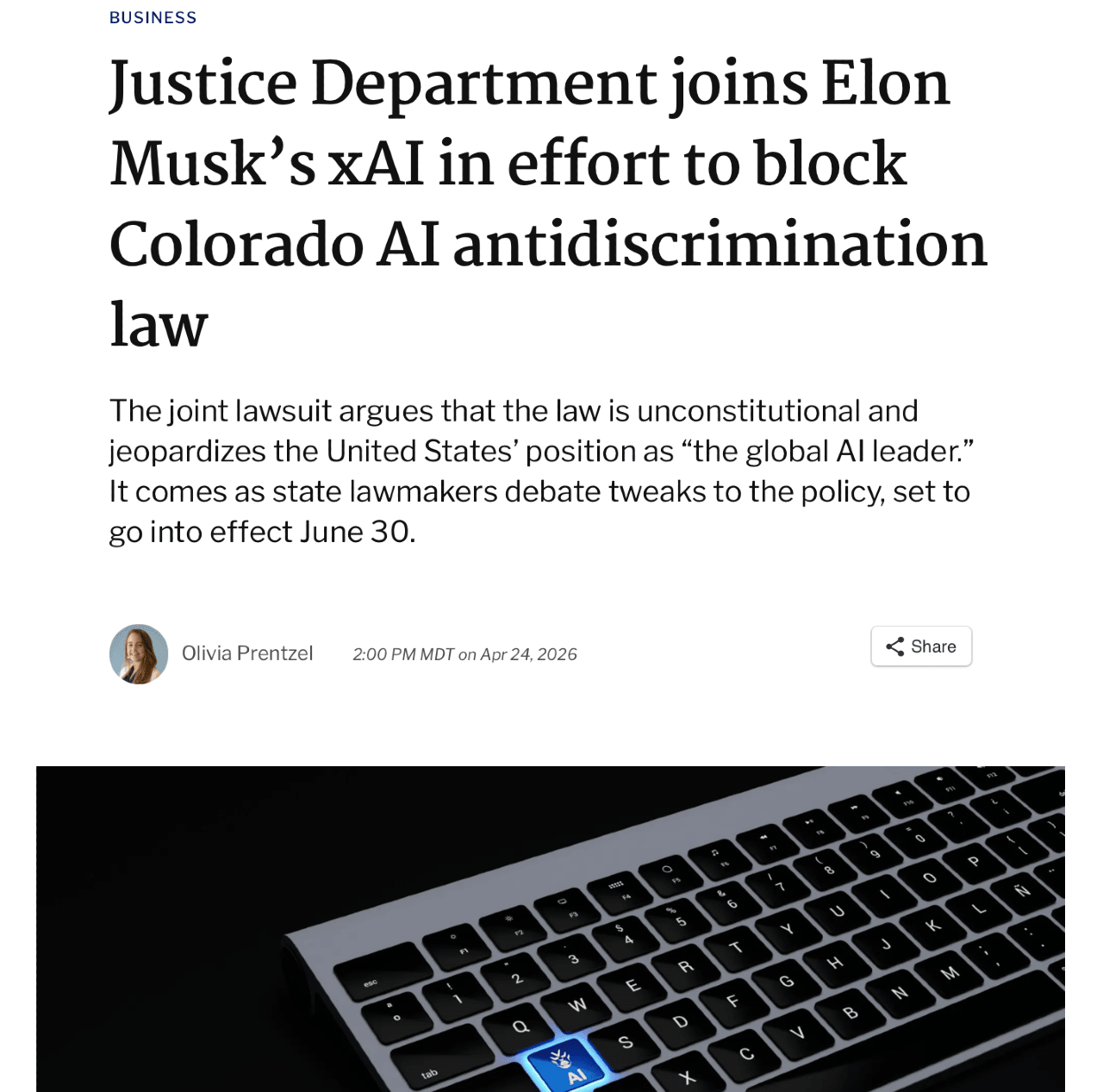
In December, Trump signed an executive order building other levers to prevent states from taking action to regulate AI: a DOJ litigation task force, a Commerce list of “onerous” state laws, and eligibility conditions on $42.4 billion in federal broadband funds. In April the Justice Department intervened against Colorado’s own AI law alongside xAI. The federal government is now using litigation and money to pressure states out of regulating at all, which quietly turns every statehouse seat into a vote on whether that pressure works.
👥 vs 🤖
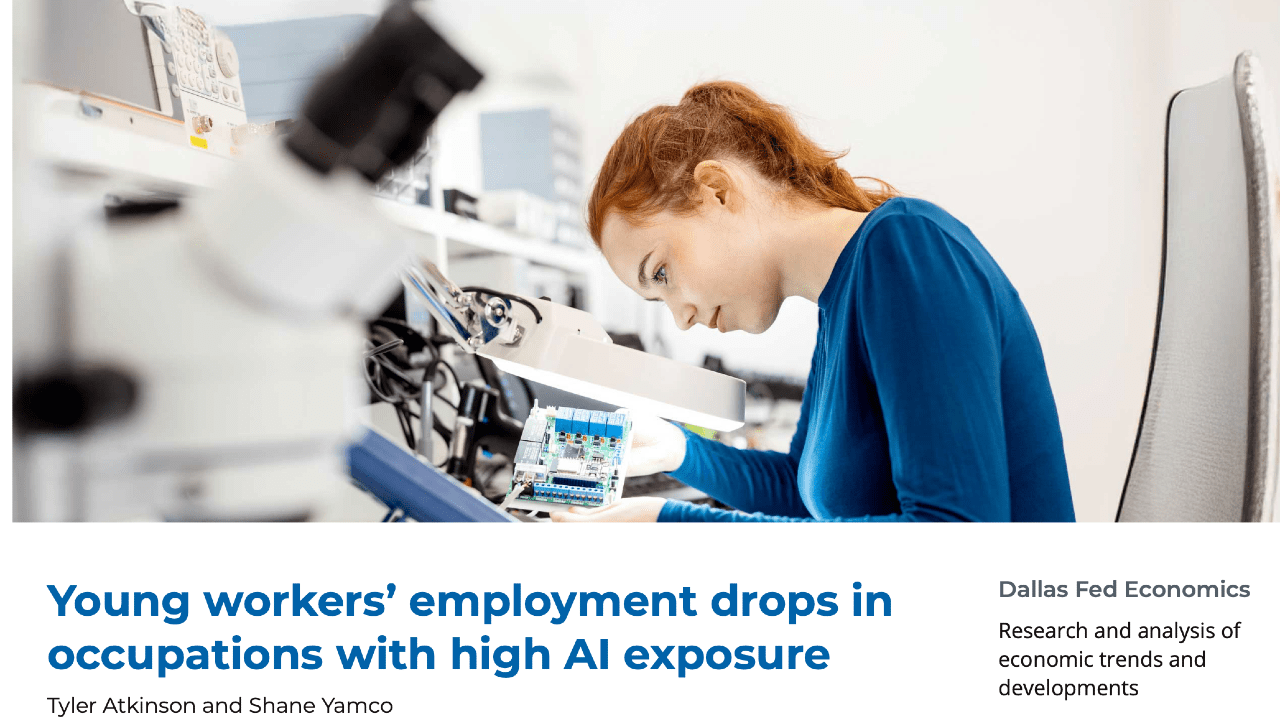
Young voters hold the most concrete AI grievance in the country, and neither party is speaking to it. Dallas Fed research found employment for 20-to-24-year-olds in AI-exposed occupations fell from 16.4% to 15.5% of the employment share — driven not by layoffs but by employers never hiring them in the first place. AI was the leading stated reason for US job cuts this year, more than 116,000 through August. That is a felt, material loss among precisely the voters whose turnout decides our eleven highest-scoring seats, and the first party to offer them something better than sympathy will be repaid at the margin.
If you like what we’re doing, please share Flip the States with a friend and ask them to sign up so they get analysis and recommendations like these. If you love what we are doing, send us a donation to help fund the work. We’re a registered 501c4 nonprofit and never take from donations that go directly to the candidates you choose to support.