

There’s plenty of outrage so we aren’t going to do that. Instead, we’re creating a place with new tips, tools, insights, sources, and stories that can help us understand how to win this November.
🗳️🚨
The most effective voter suppression tool this November may not be — it could be who’s standing outside the polling place.
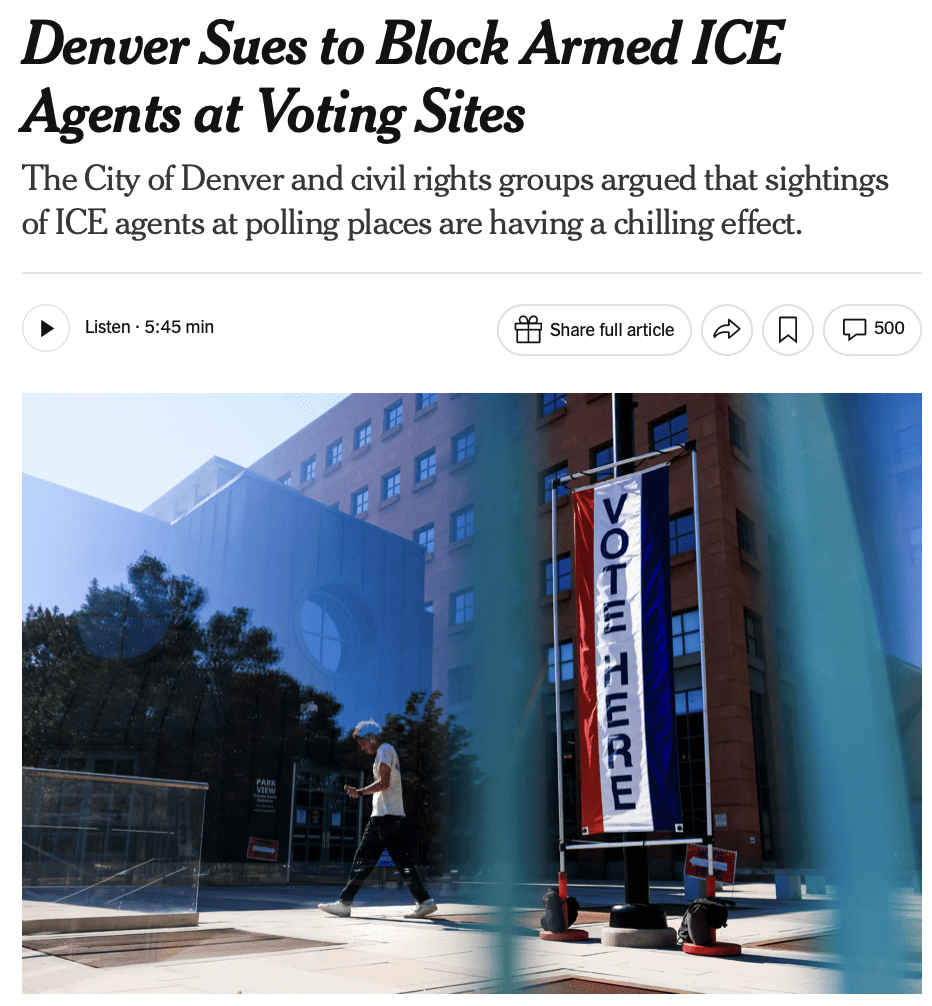
LULAC, UnidosUS and Common Cause asked a federal judge on September 10 to block armed ICE agents from serving warrants at voting sites — the first suit of its kind — invoking a Reconstruction-era statute barring armed federal force from any place where an election is held. Homeland Security Secretary Markwayne Mullin says Democrats are fear-mongering and that agents would only appear for a threat or a warrant, and DHS promises any arrests near polls would be “intelligence-driven targeted enforcement.” That response misses the point entirely. Suppression by ambiguity doesn’t require a single arrest; it only requires a voter in a mixed-status household to decide a ballot isn’t worth the risk to her mother. That math falls hardest on the Latino precincts carrying our most competitive seats across Arizona, California and more.
🙌
There’s good news: What actually stopped Missouri’s gerrymander wasn’t a lawsuit — it was a stack of petition signatures.
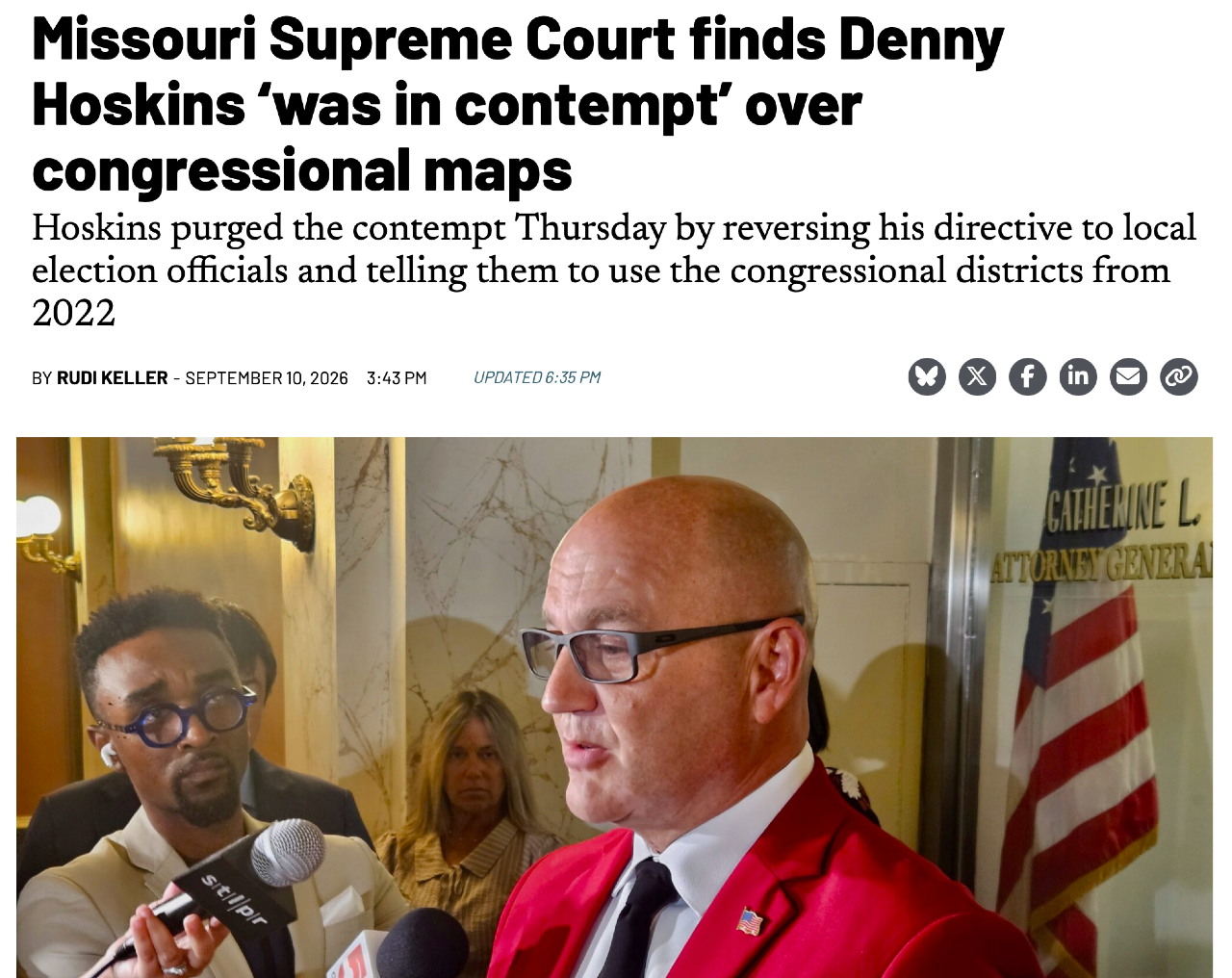
After Republicans passed a mid-decade map last September designed to hand them the 5th District, the group People Not Politicians ran a referendum drive that suspended the map before it ever took effect, and on September 10 the Missouri Supreme Court held Secretary of State Denny Hoskins in contemptfor directing local election officials to use it anyway. He reversed himself within hours — but only after Justice Kavanaugh stayed the last federal order propping the map up — so November’s election runs on the 2022 lines and the map itself goes to voters as Proposition A on November 3. We should be clear-eyed about how close this was: a statewide elected official defied a direct court order for a week, and what saved the seat was ordinary people with clipboards.
😁
Watch what Republican incumbents are doing with their calendars, not what they say into microphones.
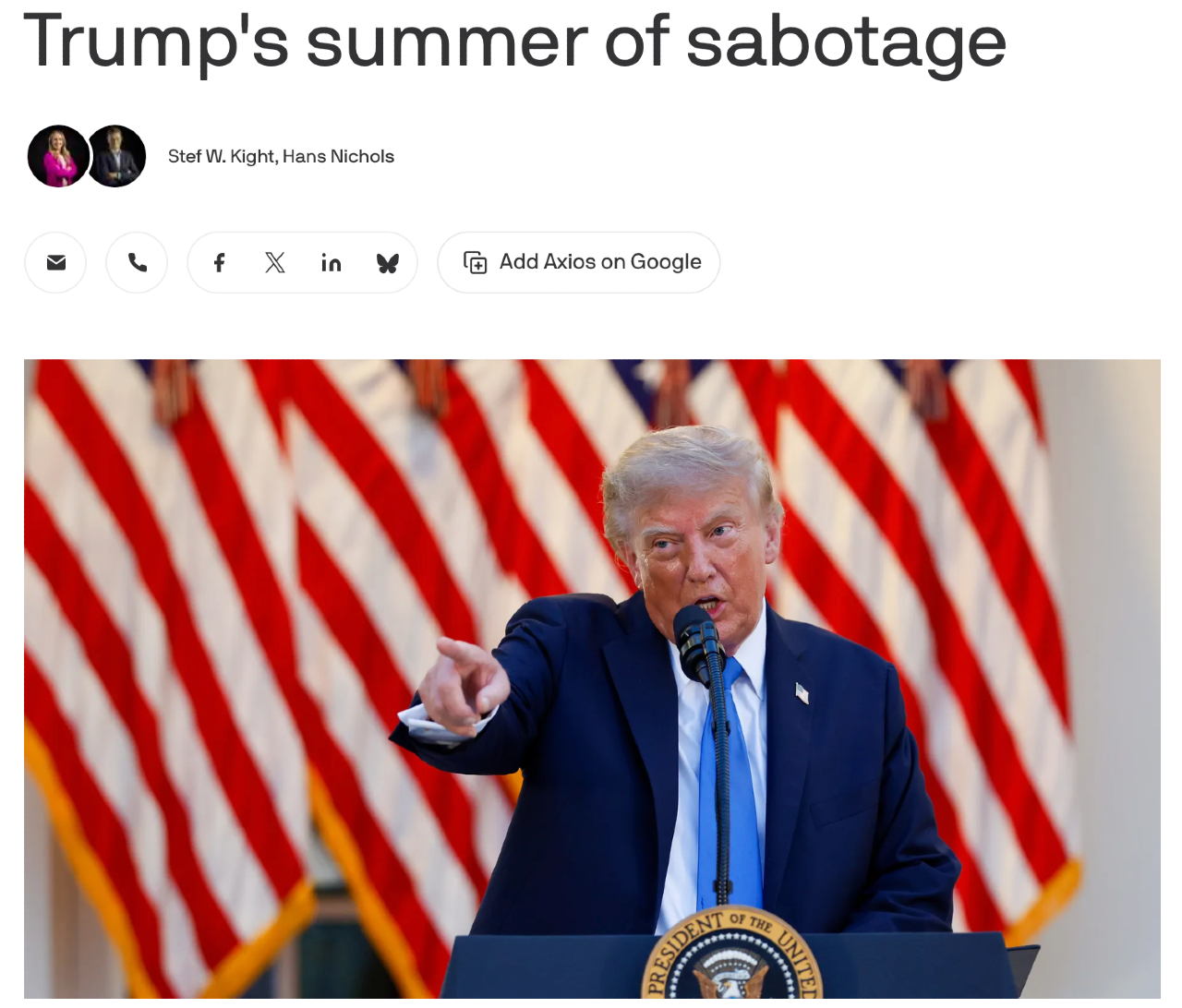
Axios reports that more than 100 GOP lawmakers were expected to skip their own midterm convention. Trump’s plan to import tariff-free beef drew public criticism from more than a dozen Republican senators, his Canadian tariffs landed on the must-win border states of Maine and Michigan, and his call to boycott Bombardier forced his own ally Roger Marshall to go defend 1,200 Kansas jobs in a state where the Senate race is suddenly live. Republicans spent August trying to localize their races while their own president spent it nationalizing them — on affordability, the exact issue their strategists already name as their biggest vulnerability. That sharpens our targeting message: the strongest case against a Republican incumbent in a competitive district isn’t that he’s loyal to Trump, it’s that his loyalty is costing his district money- and we’re exploiting it.
🙌
Donate today to our Flip 5 to Take The House Campaign
Take direct action to target vulnerable Republicans this Spring. Our campaign to flip 5 seats is focused on targeting Republican incumbents and tying them to Trump’s abuse of power and corruption. We can take power together. Support our campaign now.
💪
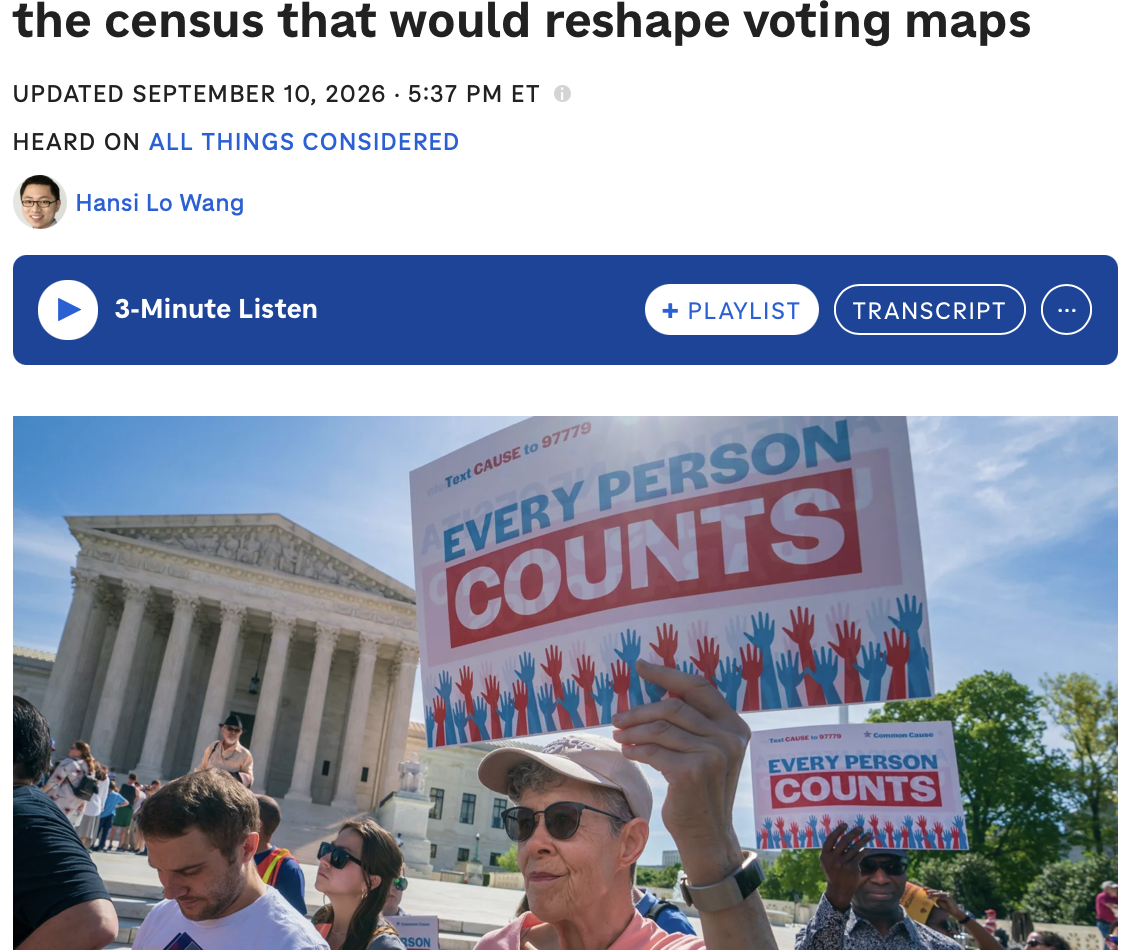
The fight that decides the next decade of House maps started this week, and it isn’t on any ballot.
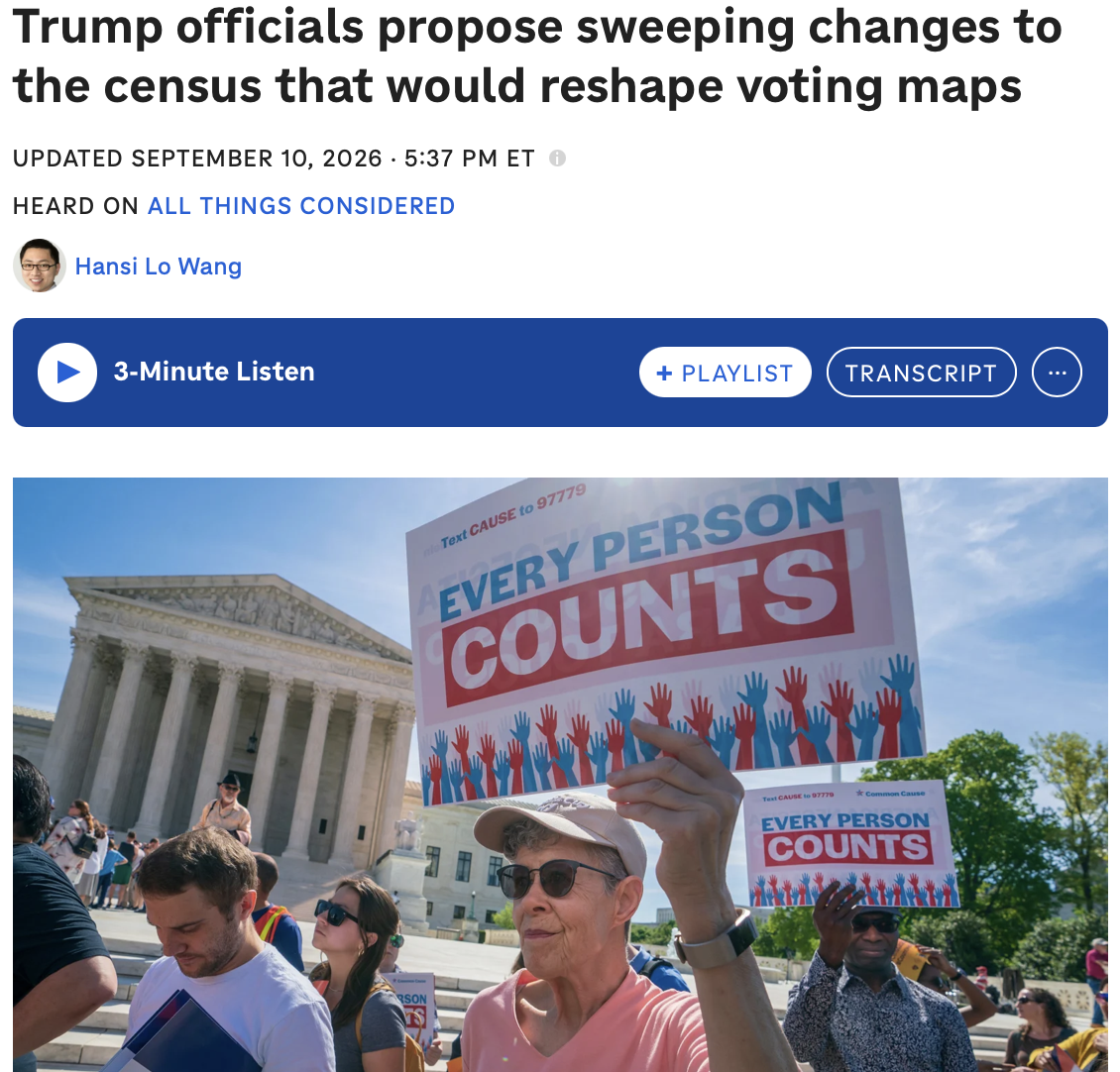
The administration proposed on September 9 to exclude non-citizens without green cards from the 2030 apportionment count — the number the 14th Amendment says must include the “whole number of persons in each state” — while also dropping the census questions on race and ethnicity that have been asked in some form since 1790. Strip that data and we don’t just lose a demographic portrait, we lose the evidence base Voting Rights Act cases are built on, because proving a map dilutes Black or Latino voting power requires knowing where Black and Latino voters live. Here’s the part that matters most for what we do: Congress, not the president, holds final authority over the census, and the administration’s report on 2030 question topics is due to Congress by next April. A Democratic House is the difference between that proposal getting a hearing vs getting a rubber stamp — the clearest argument we have that this November is about the next decade, not the next two years.
If you like what we’re doing, please share Flip the States with a friend and ask them to sign up so they get analysis and recommendations like these. If you love what we are doing, send us a donation to help fund the work. We’re a registered 501c4 nonprofit and never take from donations that go directly to the candidates you choose to support.